What is transformational finance for climate and sustainable development?
Supporting climate action and shifting financial flows towards climate solutions will require a transformation of the global financial system. As banks that finance development aims using public resources, public development banks (PDBs) will have an especially important role to play. While climate finance continued to grow in 2023 and 2024 according to the OECD’s latest report (OECD, 2026), the unprecedented decline in official development assistance flows since then (a 23% decrease in 2025), has left a wider gap and the need to ensure that the public finance that remains is used efficiently and effectively.
PDBs come in various types and sizes. Multilateral development banks (MDBs) are PDBs that are funded by multiple governments, while national development banks (NDBs) are linked to one government. In total, there are more than 550 PDBs around the world (PKU & AFD, 2026). Although they vary in mandate, governance, and scale, PDBs provide valuable public resources that need to be used to greatest impact to help countries meet their development and climate goals.
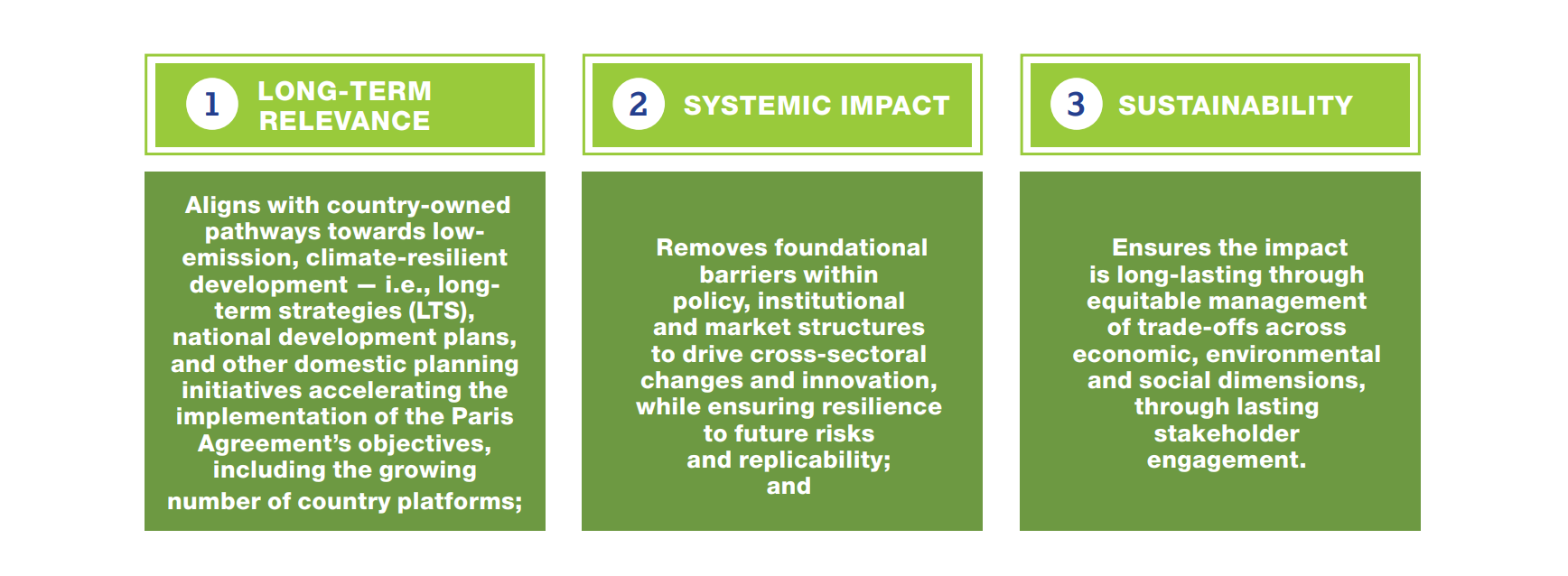
Transformational finance aims to address systemic barriers, improve enabling conditions for climate-related investments, and drive change beyond a single transaction. This means supporting wholesale change in key sectors like energy, transport, heavy industry, and agriculture. This kind of holistic thinking will require shifting investment allocation frameworks towards systemic, long-term, country-driven transitions aligned with the Paris Agreement.
This expert note, co-written with the World Resources Institute (WRI), outlines some of the barriers and opportunities for PDBs in embracing and implementing the idea of transformational finance and strategically deploying investments to deliver transformational outcomes. It reviews existing definitions for transformational finance used by different multilateral actors. Based on this, it proposes a common definition of transformational finance to help guide investment decisions. In addition, this note highlights some of the opportunities and barriers facing PDBs in channelling transformational finance and in tracking its outcomes. It showcases examples of transformational finance, and highlights lessons learned in implementation.
The three necessary elements of transformational finance :